
How Often Should a CNC Machine Be Serviced? A Practical Service Interval Guide
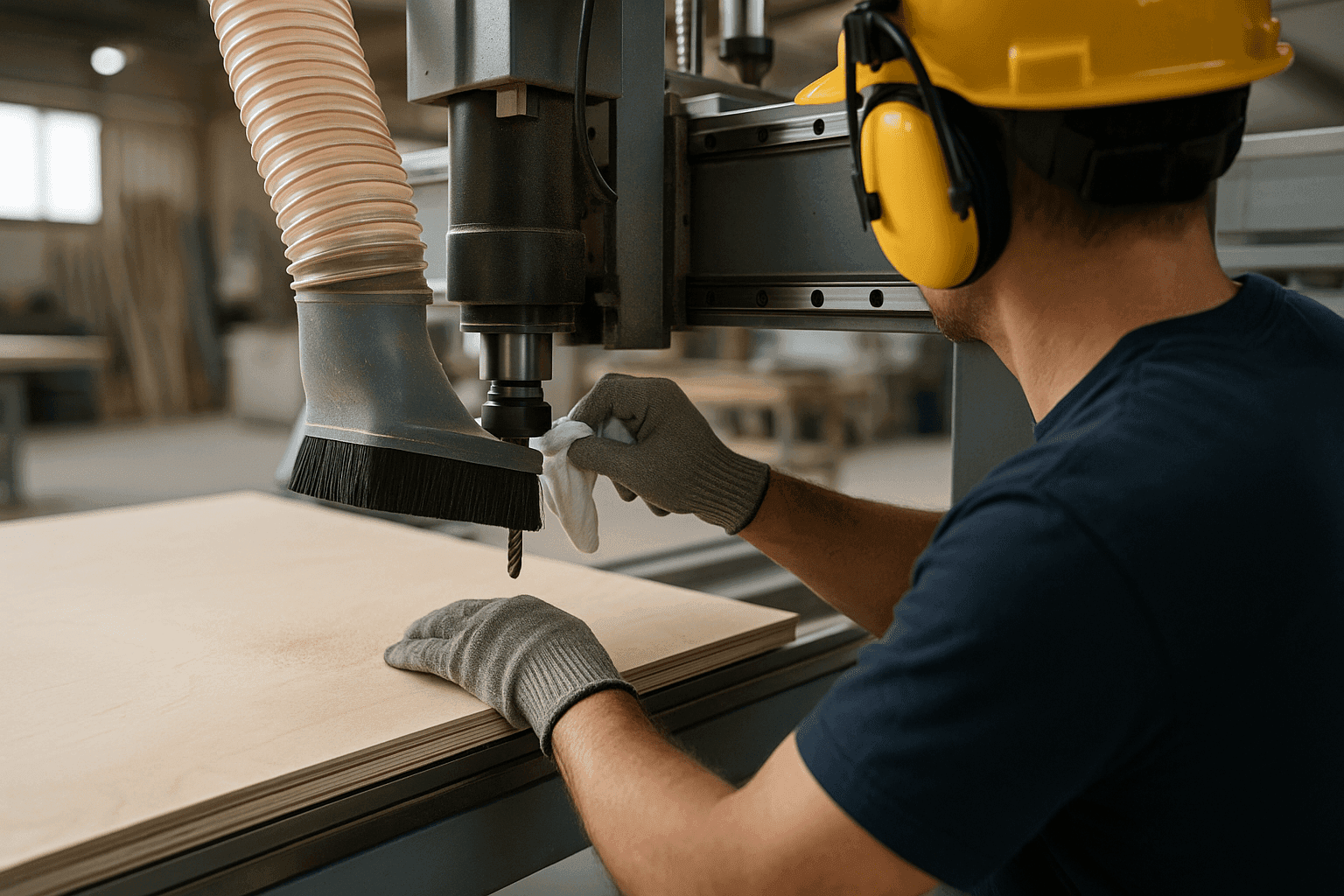 How often should a CNC machine be serviced? CNC service intervals from daily checks to annual servicing, warning signs and when to call an engineer.
Ask ten workshops how often their CNC machine is serviced and you will get ten different answers. Some wait for an alarm, some follow a calendar, and some are not sure when the last service was. The right answer is a mix of operator checks every day and a professional CNC service at planned intervals, based on how hard the machine works.
This guide explains CNC service intervals in plain terms: what to do daily, weekly, monthly and yearly, which warning signs mean a service is overdue, and when to bring in an engineer. It applies to CNC routers, machining centres and similar production machines.
How Often Should a CNC Machine Be Serviced?
As a rule, operators should check and clean a CNC machine every day, and a qualified engineer should service it at least once a year. Machines that run multiple shifts, cut dusty materials such as MDF, or hold tight tolerances usually need professional servicing more often. Always follow the intervals in your manufacturer's manual, because they take priority over any general guide.
CNC Service Intervals at a Glance
- Daily (operator): clean the bed, spindle area and tool holders, check lubrication and air supply, and listen for unusual noise.
- Weekly (operator): clean or replace extraction and cabinet filters, inspect wipers, covers and the tool changer, and check the vacuum table and seals.
- Monthly (operator or technician): inspect belts, couplings, cables and hoses, check lubrication points, and test axis accuracy with a test cut.
- Every 6 to 12 months (engineer): full preventive service covering the spindle, guideways, ball screws or racks, drives, safety circuits and geometry.
- As needed: after a collision, a long idle period, a move to a new site or a major change in the material you cut.
What Changes the Service Interval?
There is no single number of hours that suits every machine. These factors decide how soon a service is due:
- Running hours: a machine on two or three shifts wears faster than one used a few hours a day.
- Material: MDF, composites and plastics create fine dust that works into rails, bearings and electrics.
- Workshop conditions: heat, damp and poor extraction shorten the life of components.
- Tolerance: if parts must fit precisely, accuracy checks need to happen more often.
- Machine age: older machines benefit from more frequent inspection of bearings, belts and wiring.
Daily and Weekly CNC Maintenance: Your Operators' Job
Most avoidable breakdowns start with dust, dry rails or a neglected filter, which is why operator care matters more than any single annual visit. Make the daily routine short and non-negotiable: clear chips and dust, wipe tool holders and the spindle taper, confirm lubrication, and run a short warm-up before heavy cutting.
Related reading: the full checklist is in our CNC machine maintenance checklist and schedule.
Keep a Simple Maintenance Log
Write down every clean, lubrication, filter change, alarm and tool crash. A log makes patterns obvious, helps engineers diagnose faults faster, and proves a service history when you come to sell the machine.
What a Professional CNC Service Should Cover
A planned service is more than a clean and a grease. A thorough preventive CNC service normally includes:
- Spindle condition, cooling, runout and tool-holding checks
- Linear rails, guideways, ball screws or rack and pinion inspected for wear and lubrication
- Axis backlash, squareness and geometry checks
- Vacuum pump, table zones, seals and filters tested
- Drive belts, couplings, sensors, limit switches and cables inspected
- Electrical cabinet, cooling fans, emergency stops and safety interlocks checked
- Controller parameters, offsets and programs backed up
- A written report with recommended actions and spare parts
7 Warning Signs Your CNC Machine Is Overdue for Service
- Parts are drifting out of tolerance or joints no longer fit.
- Surface finish has got worse, or you see chatter marks.
- The spindle is louder, hotter or vibrating more than usual.
- You are seeing following-error or axis alarms.
- Tool changes fail or hesitate.
- Vacuum hold-down is weak and sheets move during cutting.
- Breakdowns are becoming more frequent.
If you notice any of these, stop and have the machine checked. Running through a developing fault usually turns a small repair into a large one.
Reactive Repairs vs Preventive CNC Servicing
Waiting for a failure means the machine stops at the worst moment, often with a deadline attached, and you pay for urgent repairs plus lost production. Preventive servicing turns that into a planned, short visit. Over the life of a machine, it protects the most expensive components, which are the spindle, bearings, guides and drives.
Frequently Asked Questions
How often should a CNC router be serviced?
Clean and check it daily, and arrange a professional service at least once a year. Busy, multi-shift or dusty workshops often benefit from a service every six months.
What happens if a CNC machine is not serviced?
Wear builds up unnoticed. Accuracy falls, the spindle, bearings and guides wear faster, breakdowns become more frequent, and repairs end up costing more than planned maintenance would have.
How long does a CNC machine last?
A well-built CNC machine that is cleaned, lubricated and serviced regularly can stay productive for many years. Lifespan depends on build quality, workload and, above all, how well it is maintained.
How much does CNC servicing cost?
It depends on the machine type and size, its age and condition, and what the service needs to cover, so there is no honest one-size-fits-all figure. Request a quote with your machine model and we will tell you what a service involves.
Can operators service a CNC machine themselves?
Operators should handle cleaning, lubrication checks and filters. Spindle work, geometry calibration, drives and electrical checks should be done by a trained engineer following the manufacturer's procedures.
Plan Your CNC Service with Micromax Group
Micromax Group supports CNC routers and woodworking production machinery with servicing guidance, maintenance planning and practical support across the UK and Northern Ireland. For service in Belfast and the surrounding area, see CNC servicing in Northern Ireland, or get in touch for a quote with your machine model and how you use it.
Ready to Upgrade Your Workshop?
Tell us what you're cutting and where - we'll size the right machine and get you a quote fast.